
 By Mano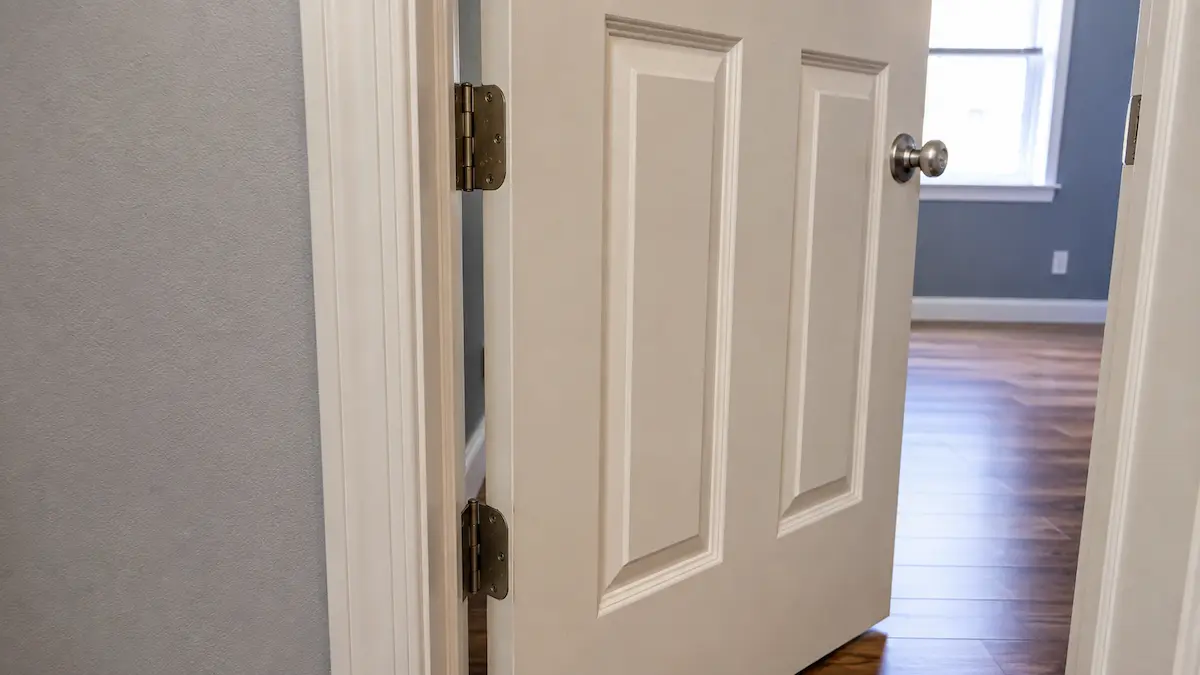
A door that slowly swings shut after you open it usually has an alignment problem. The most common causes are loose hinges, an out-of-plumb frame, worn hinge hardware, or a door that has shifted over time. Before changing anything, find out which condition you have.
Open the door halfway and let go. If it moves toward the frame, check the hinge screws and the alignment of the door and jamb. A spirit level can show whether the hinge side is out of plumb. If the hardware is sound but the alignment is off, a small hinge adjustment or shim may correct it. A hinge-pin friction fix or door stop can also hold the door in position when correcting the frame is unnecessary.
A hinged door rotates around its hinge pins. If that hinge line is not vertical, gravity can make the door move toward one side instead of remaining where you leave it. An out-of-plumb jamb, loose hinge, poor hinge installation, or movement in the frame can produce this effect. Manufacturer troubleshooting information also identifies a door panel that is not plumb and hinge plates or screws that are not properly seated as possible causes.
An uneven floor can contribute to the problem, but don’t assume the floor is responsible before checking the hinges and jamb.
Close the door and inspect each hinge. Look for screws that have backed out, a hinge leaf that isn’t sitting flat, or movement when you gently lift the door.
Tighten loose screws and test the door again.
If a screw spins without tightening, the hole may no longer be holding the screw properly. That calls for a different repair rather than simply tightening it harder.
Place a spirit level vertically against the hinge-side jamb. A frame that leans can change the path of the door as it swings.
Also inspect the gaps between the door and frame. Uneven gaps can reveal that the slab or frame has shifted. Professional door troubleshooting guides recommend checking alignment, hinge placement and the frame when a door moves on its own.
If the door is correctly installed but only drifts slightly, adding a little resistance at the hinge can keep it from moving.
One established method is to remove a hinge pin, introduce a slight bend, and reinstall it. The small increase in friction can stop the door from freely swinging. This technique is documented by experienced carpenters and is also included in consumer DIY guidance.
Make only a small adjustment. Too much friction can make the door unnecessarily stiff.
If the problem comes from alignment rather than insufficient friction, shimming a hinge can change the position of the door slightly.
Support the door before loosening a hinge. A thin, flat shim is placed behind the appropriate hinge leaf, then the hinge is secured again. Make one small adjustment at a time and retest the door.
This is a corrective approach, so it is preferable when the hinge position is contributing to the alignment problem. The exact hinge that needs adjustment depends on the direction of the door’s movement and the geometry of the frame.
If the door is otherwise aligned and you simply need it held open, a door stop or suitable magnetic catch may be the better option.
This doesn’t correct the underlying alignment. It simply prevents the door from moving past the desired position. That can make sense when the existing frame is sound and you don’t want to alter the hinges.
A door that moves toward the open position has the same general diagnostic starting point: inspect the hinges, frame and alignment rather than assuming the door itself is defective.
Manufacturer troubleshooting material specifically lists a non-plumb door panel, improperly seated hinge plates and incorrectly positioned hinge screws among possible causes of a door that swings open by itself.
Stop experimenting with hinge adjustments if you find substantial frame movement, significant warping, structural damage, or a door that has developed several alignment problems at once.
Exterior and specialized doors may also have weather seals, closers, fire-safety requirements or other hardware that should not be modified casually.
| What you notice | What to check first |
|---|---|
| Door slowly swings shut | Hinge alignment and frame plumb |
| Door swings open | Door/jamb alignment and hinge position |
| Door rocks at the hinges | Loose or worn hinge hardware |
| Gaps around the door are uneven | Frame or door alignment |
| Problem appeared after building movement | Frame and surrounding structure |
| Door has a spring or closer | Check the closing hardware before changing the hinges |
The best repair is the one that matches the cause. Tightening a loose hinge is preferable to adding friction, while correcting a misaligned frame is preferable to repeatedly forcing the hinge pins to compensate for it.
If the door is simply drifting because of a small alignment error, a careful adjustment can often restore normal movement without replacing the entire door.