
 By Mano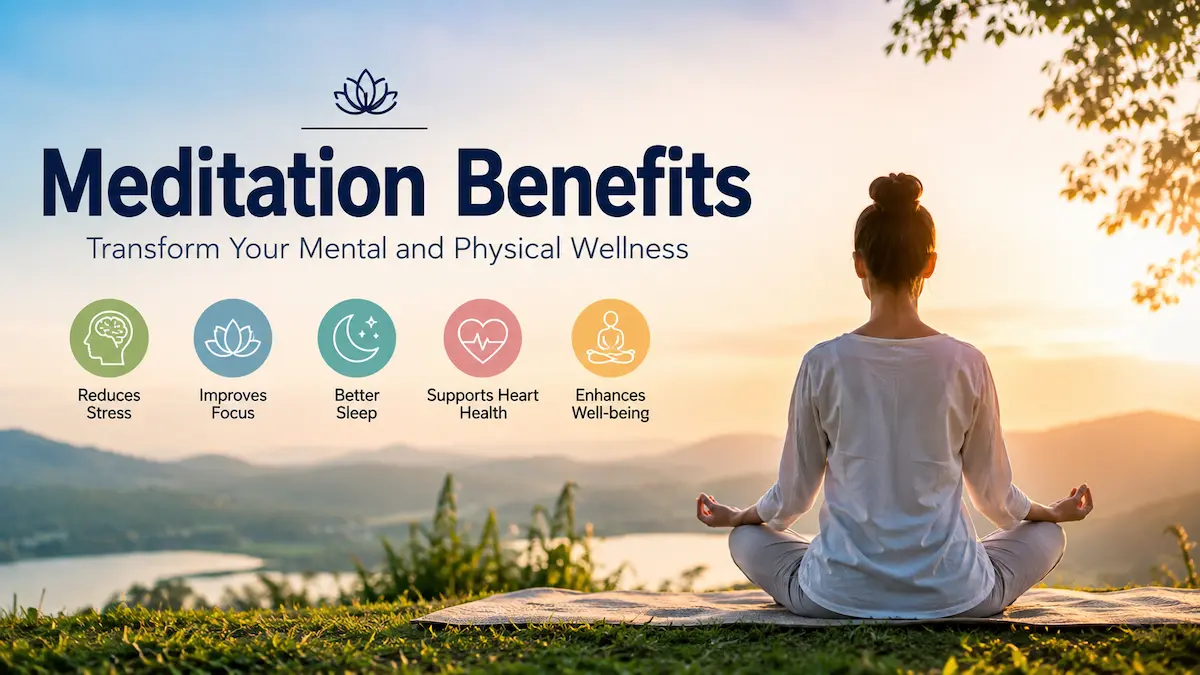
Meditation is a practice of deliberately directing attention—often toward the breath, a sound, a mantra, or present-moment sensations. Its potential benefits are broader than simply feeling relaxed. Research has examined meditation for stress, anxiety, mood, sleep, pain, attention and some cardiovascular measures, although the strength of evidence differs by outcome.
Stress activates the body’s fight-or-flight response, raising heart rate, breathing and blood pressure. Meditation can encourage a relaxation response and may reduce perceived stress and some physiological markers associated with stress.
This does not mean meditation removes the source of stress. Instead, regular practice may help you respond to stressful situations with less automatic reactivity.
Mindfulness-based approaches have shown benefits for anxiety symptoms in several studies. A 2021 analysis found short-term reductions in anxiety with mindfulness-based interventions, although the researchers noted uncertainty around the quality and long-term strength of the evidence.
Meditation should not be viewed as a substitute for professional treatment when anxiety is severe or persistent.
Meditation can train people to notice thoughts and feelings without immediately reacting to them. Some mindfulness research has found improvements in depressive symptoms and emotional distress, particularly when meditation is used as part of a broader treatment approach.
Meditation repeatedly brings attention back to a chosen object when the mind wanders. That practice may strengthen awareness of thoughts, sensations and attention patterns.
Different techniques may emphasize different abilities. Focused-attention practices narrow attention, while open-monitoring practices encourage broader awareness of ongoing experience.
Mindfulness meditation has been studied for insomnia and sleep quality. A 2019 systematic review of 18 studies involving 1,654 participants found improvements in sleep quality compared with education-based treatments. However, meditation was not clearly better than established approaches such as cognitive behavioral therapy for insomnia or exercise.
So meditation may be useful as part of a sleep routine, but persistent insomnia deserves proper evaluation.
Some research suggests meditation can modestly reduce blood pressure, particularly in certain populations. However, the American Heart Association has noted that the specific effects of meditation on blood pressure are not fully established.
Meditation should therefore complement—not replace—proven blood-pressure treatment, medication, exercise and dietary changes when those are needed.
Meditation does not remove the physical cause of pain, but mindfulness-based approaches may change how a person experiences and responds to pain.
Research on acute and chronic pain has produced mixed findings. NCCIH reports some evidence for short-term improvement in certain pain conditions, while other results remain uncertain.
There is no single method that suits everyone.
- Mindfulness meditation focuses on present-moment awareness.
- Focused-attention meditation trains attention on one object, such as breathing.
- Body scan meditation moves attention through physical sensations.
- Loving-kindness meditation develops feelings of kindness and compassion.
- Mantra-based meditation uses a repeated word or phrase as an attentional anchor.
Research comparing meditation styles suggests that different practices can emphasize different psychological skills, so choosing a method that feels practical and sustainable matters.
Meditation is a skill, not a test of whether you can keep your mind completely blank.
Thoughts will appear. Attention will wander. The practice is noticing that distraction and gently returning your attention.
A short, consistent practice is a reasonable way to begin. There is no evidence-based rule that everyone must meditate for a particular number of minutes to receive benefits; the appropriate duration depends on the technique, person and goal.
Meditation is generally considered low risk, but “safe for most people” does not mean “risk-free for everyone.” Research has documented unwanted experiences, including increased anxiety, depressive symptoms and other forms of distress in some practitioners.
If meditation consistently makes you feel worse, stop and discuss the experience with a qualified healthcare professional, particularly if you have significant mental-health symptoms or a history of trauma.
Meditation has its strongest practical case as a tool for stress management, present-moment attention and emotional regulation, with research also supporting possible benefits for anxiety, sleep, pain and some cardiovascular measures. The evidence is not equally strong for every claim, and meditation is not a cure-all.
The most useful approach is simple: choose a technique you can practice comfortably, stay consistent, and treat meditation as one part of a broader approach to mental and physical health.